Yew Forest Loop

2:30 h 134 hm 134 hm 24,0 km moderate

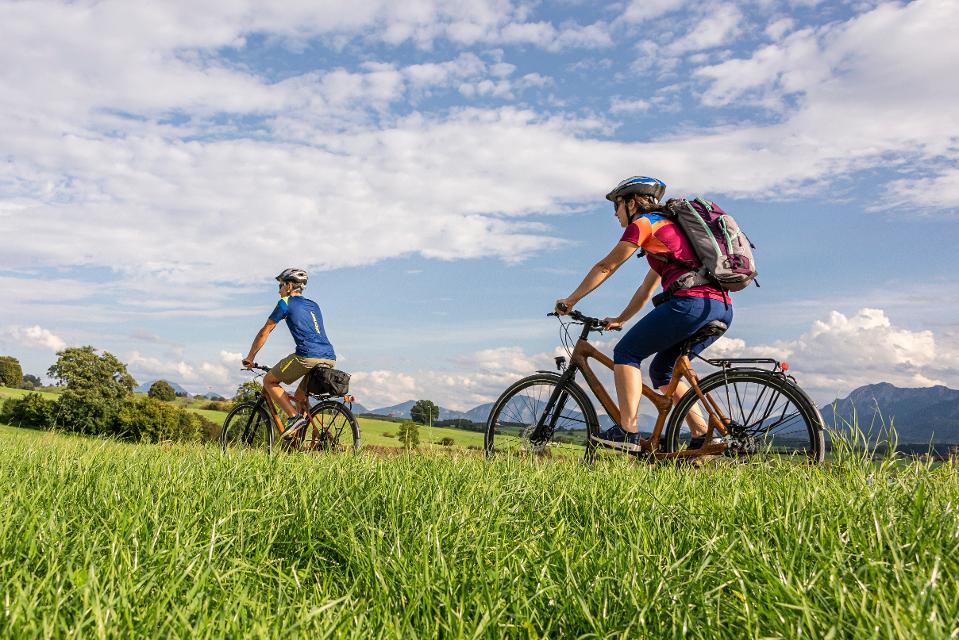
The leisurely route leads west of Weilheim to the Paterzell Yew Forest and back via Zellsee.

Sicherheitshinweise:

Please note that from Paterzell a section must be ridden on the narrow, heavily trafficked district road.


Wegbeschreibung:

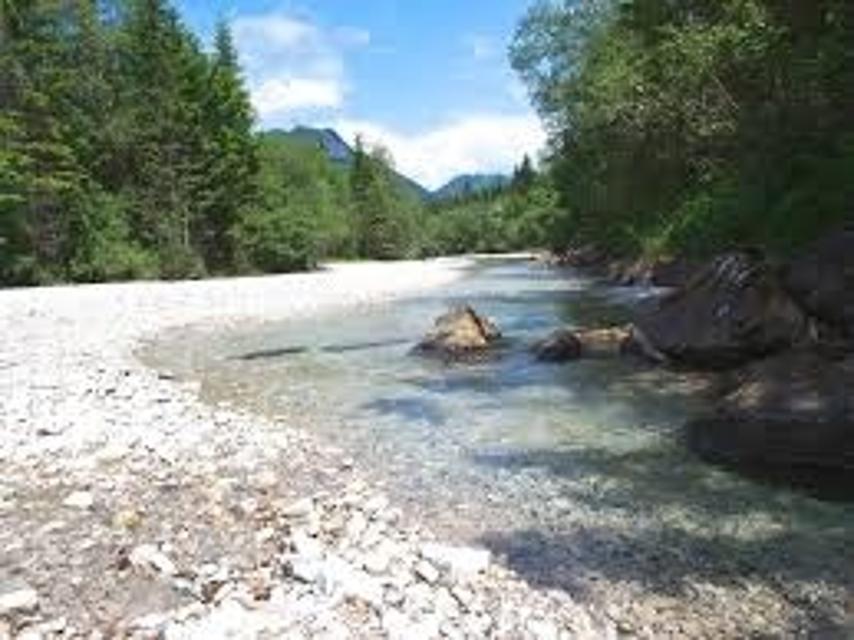
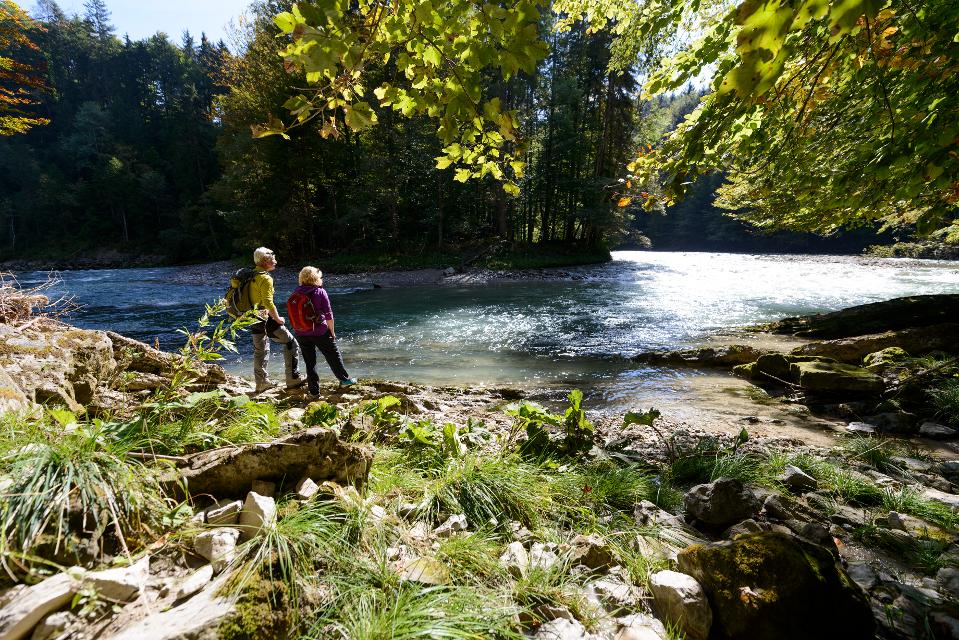
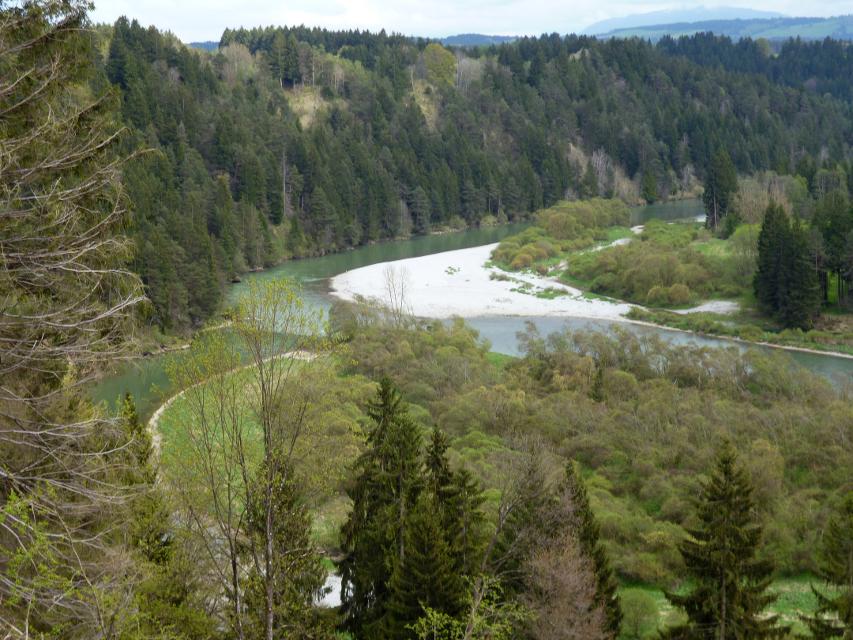
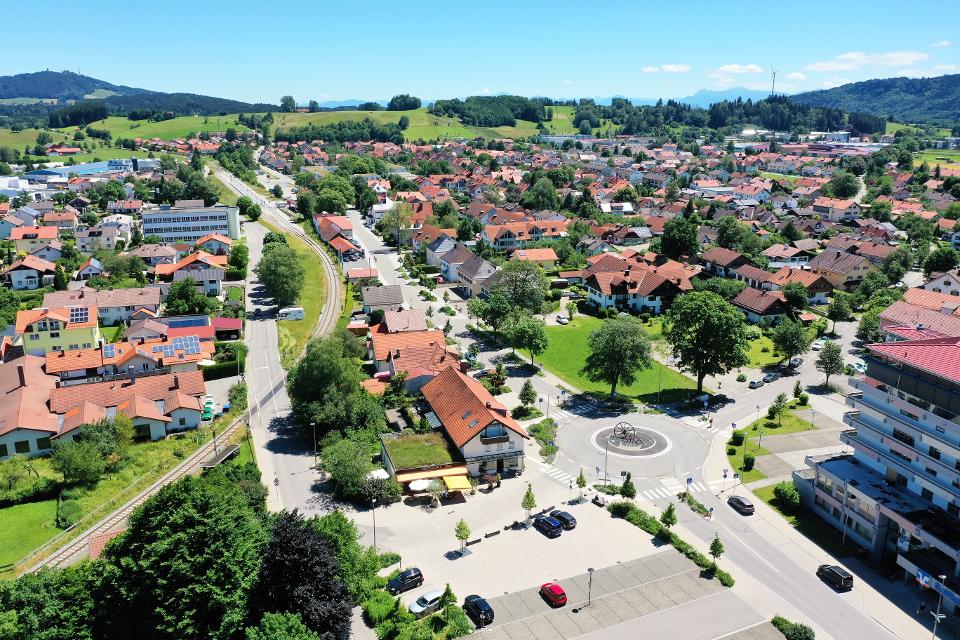
The starting point is the Ammer Bridge on the state road towards Wessobrunn. Very nearby, at the Hochlandhalle, parking spaces can be found. When Weilheim was threatened by floods in earlier times, people made pilgrimages to the Ammer Bridge. During the procession they carried the Blessed Sacrament and at the Ammer Bridge the four Gospels were solemnly read. From the bridge, the path goes southwards along the western Ammer dam. Willow bushes line the riverbank. This tree species typical for floodplain locations is often used for bank stabilization.

The Ammer served for centuries as a transport route, on which wood was brought from the mountains to the more densely populated Alpine foothills. The logs were individually thrown into the currents, a practice called log driving. In Weilheim, they were retrieved from the water—mostly spruces and firs—and sold, used in construction, or transported further. The height of log driving was in the 16th and 17th centuries. In 1611, a log driving yard with a collecting basin was built in Weilheim in the area of today‘s Holzhofstrasse. With the beginning of the railway era, log driving gradually declined, but it is documented for the Ammer until the beginning of the Second World War. However, the Ammer can also be dangerous for people. Flooding has been reported for centuries, occurring at irregular intervals and causing sometimes great damage and even loss of lives.

Examples include flood events in 1910, 1940, 1946, and 1999. At Pentecost 1999, the water level of the Ammer rose by 4.5 m within 24 hours and flooded parts of Weilheim despite dikes raised with sandbags. Especially in spring, such floods can occur when snowmelt in the mountainous catchment area meets heavy rainfalls.

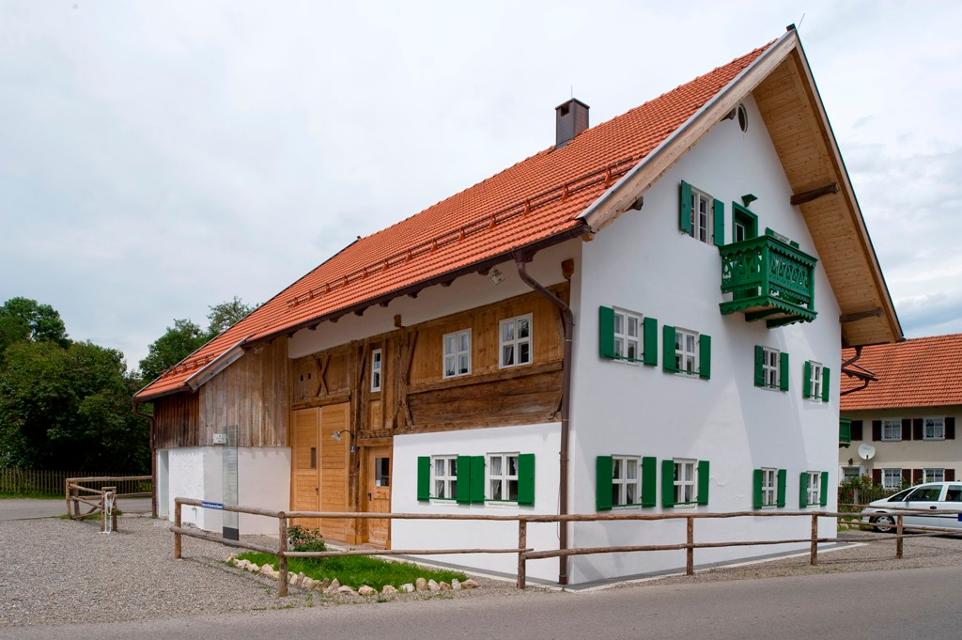
Via the Weidach path, one reaches the rural village Oderding. At a typical farmhouse with a projecting roof and window shutters, turn right into Unterdorfstrasse. Some of the houses here are built of tuff stones, which were probably quarried in Polling.

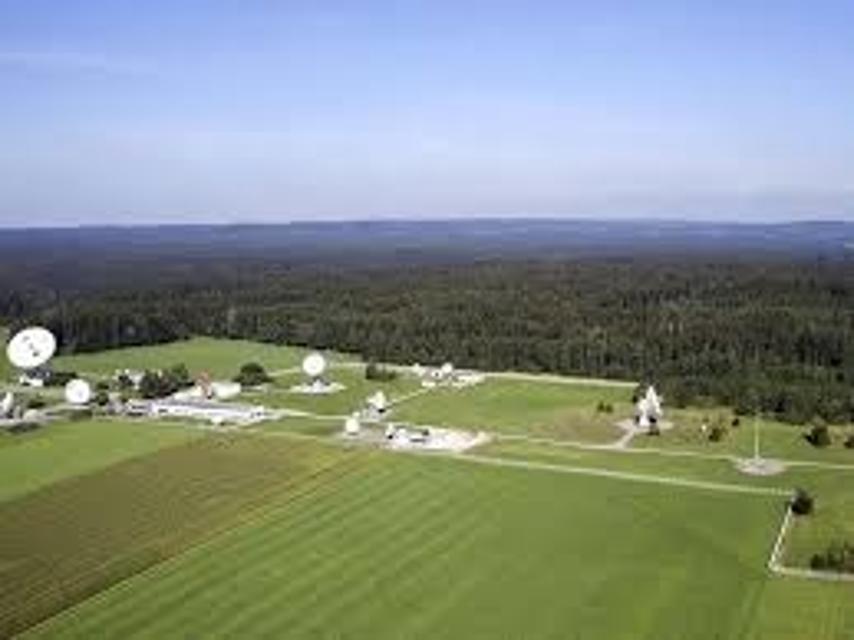
Outside Oderding, the route goes up a moraine ridge that extends from Peißenberg to Waitzacker. This represents the third and youngest retreat stage of the Ammersee glacier about 18,000 years ago. Over the tracks and past the hamlet Schönau, you reach the paved Peißenberg - Paterzell road. Here turn right and continue to the hamlet Kugelsbühl. After riding through the forest for some time, you look out over the Rott valley and the gliding airfield.

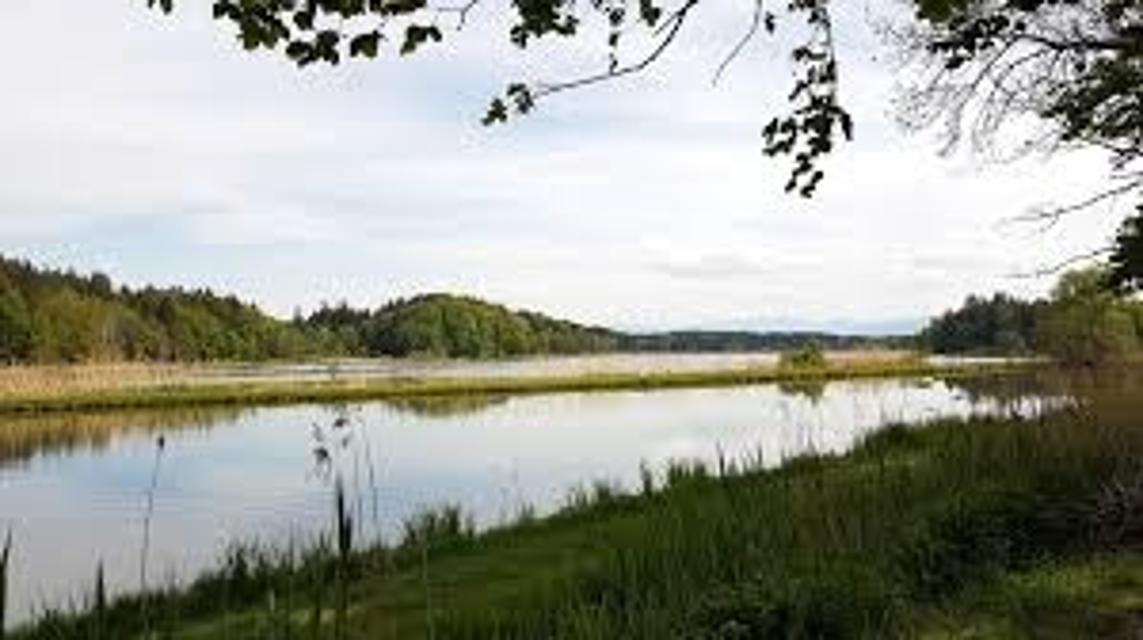
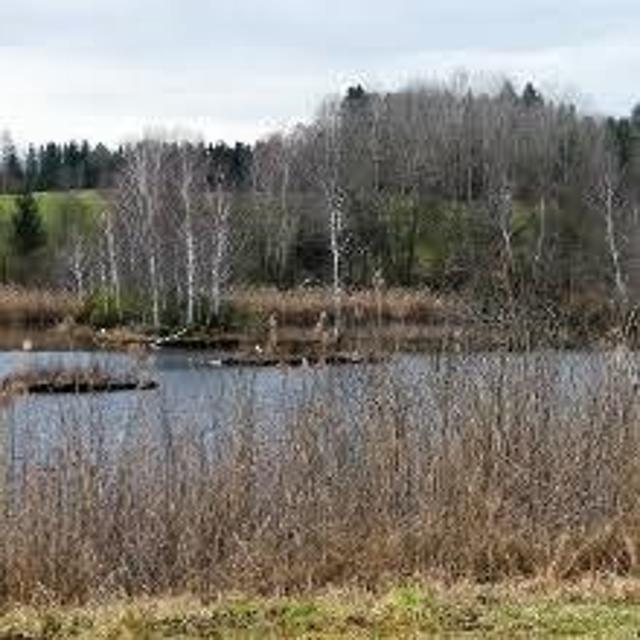
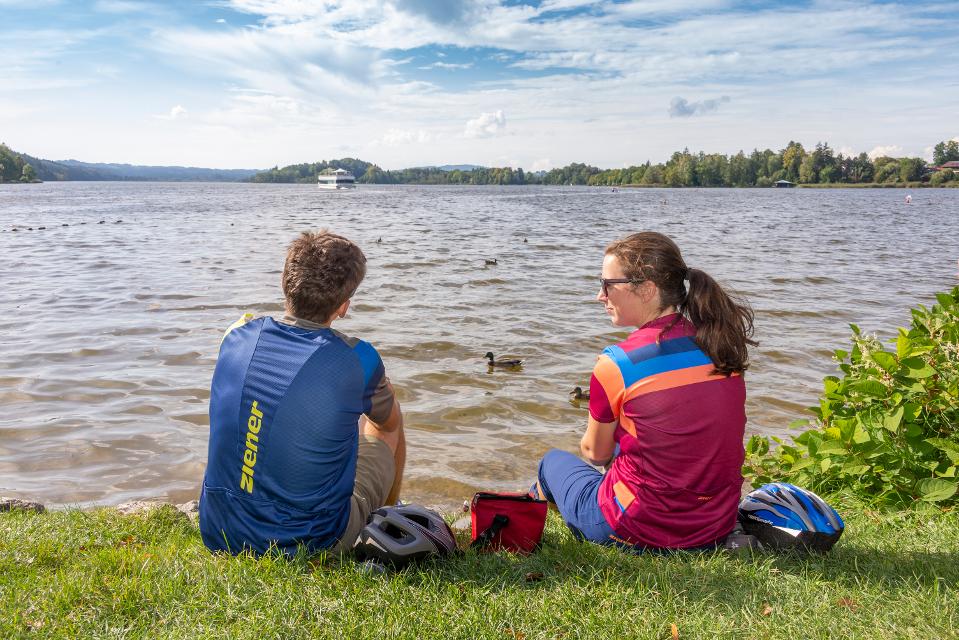
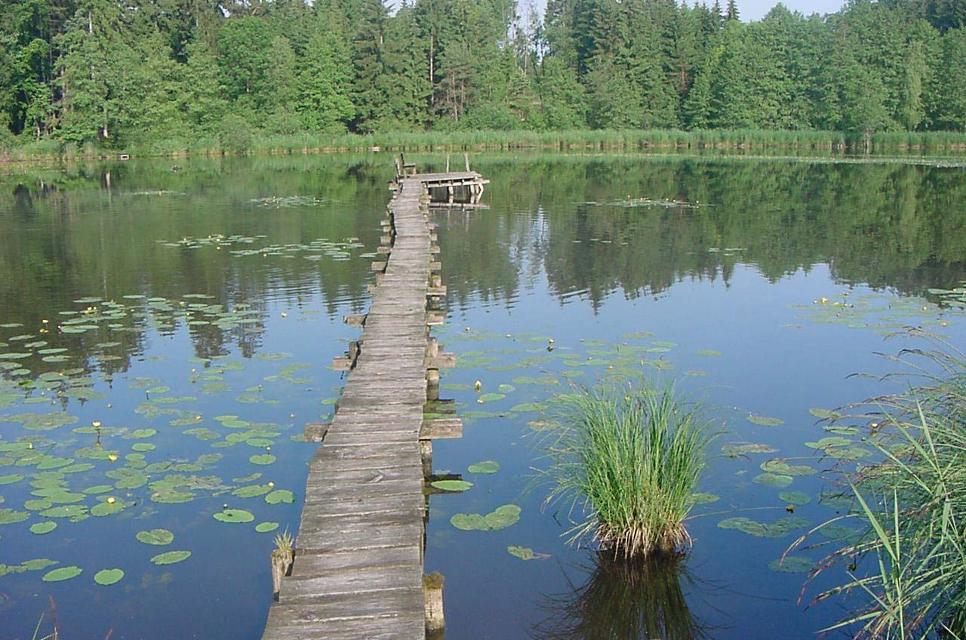
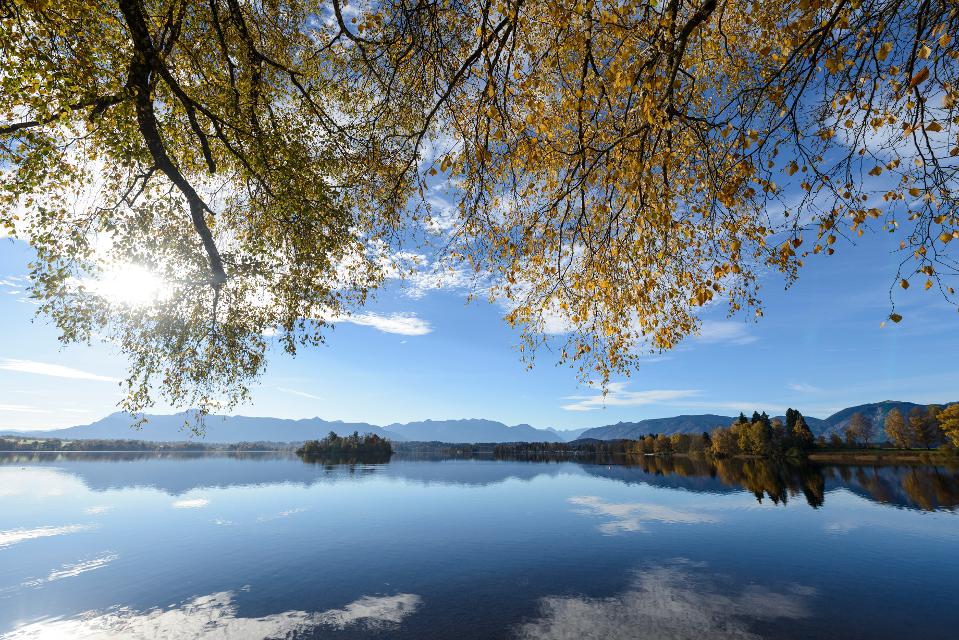
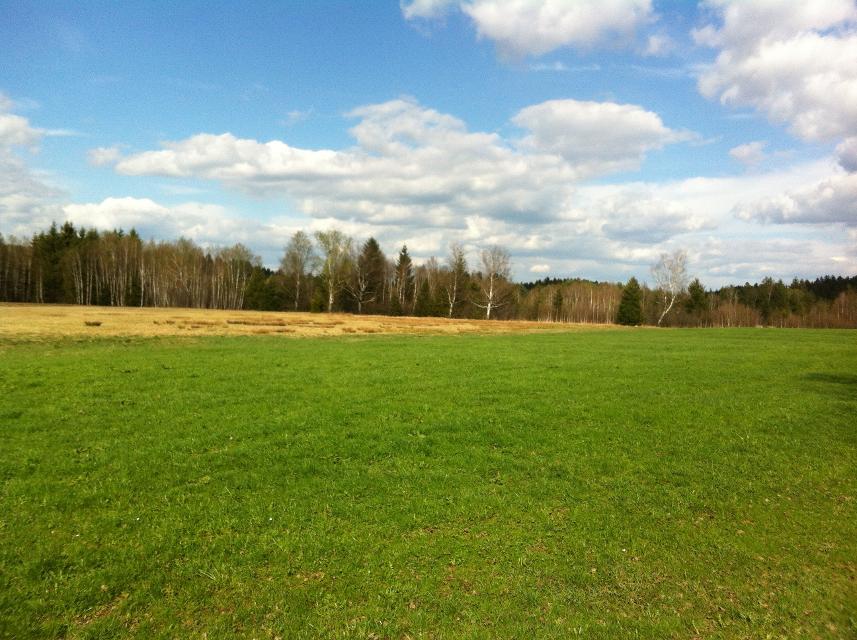
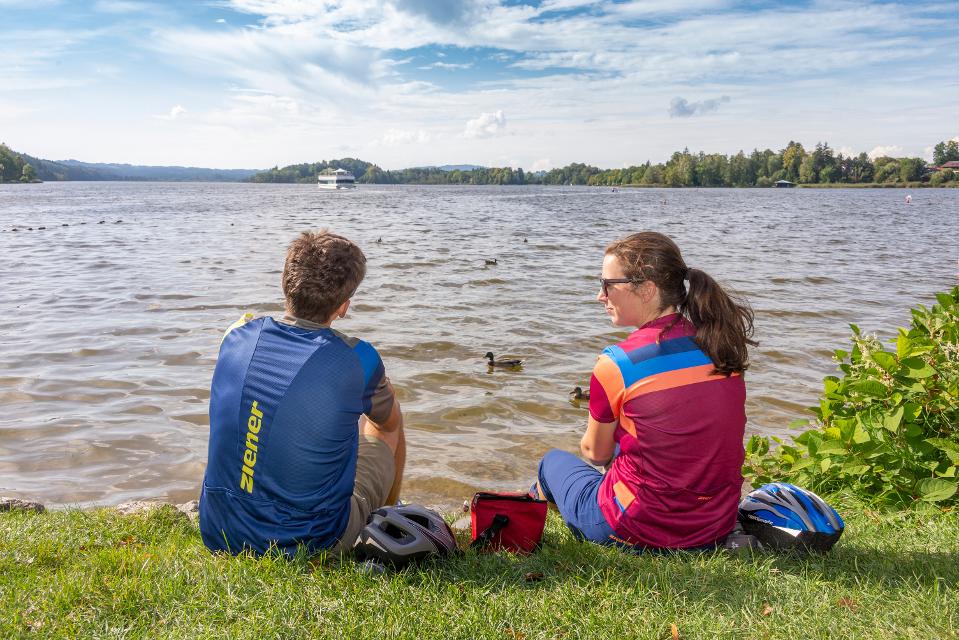
Always following the green bike sign, the view opens towards Zellsee with its reed stands and groups of birch trees. These accompany the path further to the Moosmühle. Zellsee is a paradise for waterfowl. At the beginning of the 15th century, monks from Wessobrunn dammed the Rott creek, creating Zellsee. Such ponds were of special importance then, as they were used for breeding food fish, which served as nourishment on the numerous fasting days. The southern area of Zellsee, which is separated by the so-called Suppendamm (cross dam) from the intensively pond-managed northern part, is a paradise especially for waterfowl with its small bays, reed islands, and extensive reed areas together with the adjacent unused small ponds. But birds of prey such as black and red kites, marsh harriers, or hobbies also find food here. Furthermore, the lake serves as a resting place for migratory birds in spring and autumn, and even rare species like ospreys or great egrets can be observed here. The birds seem to have become accustomed to the flight operations at the nearby Paterzell sport airfield.

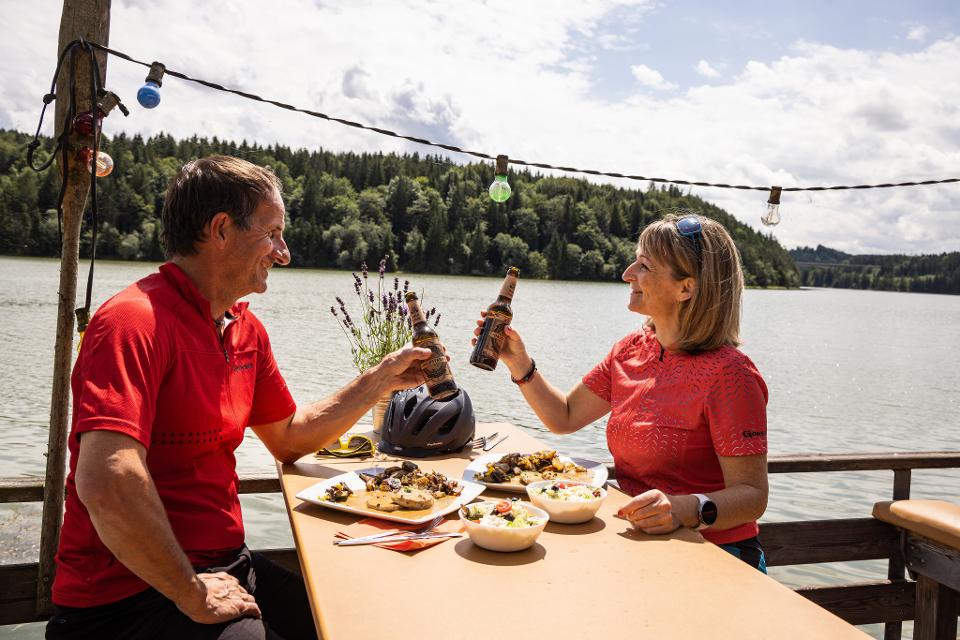
At the Moosmühle, the path turns right before going up to Paterzell. If you need refreshment or a snack along the way, the guesthouse “Zum Eibenwald” in Paterzell is open (no day off!), where you can also admire yews.

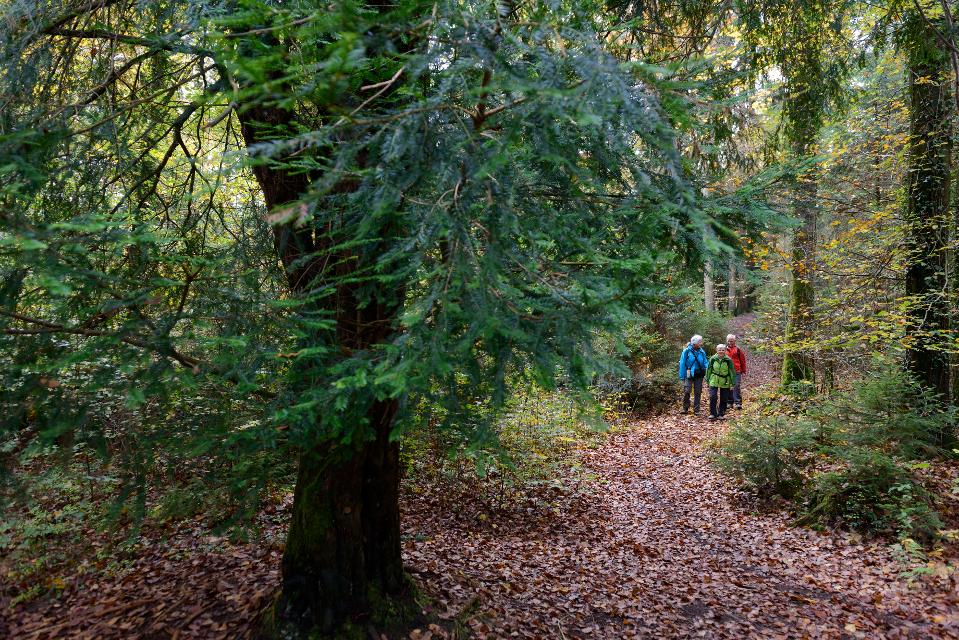
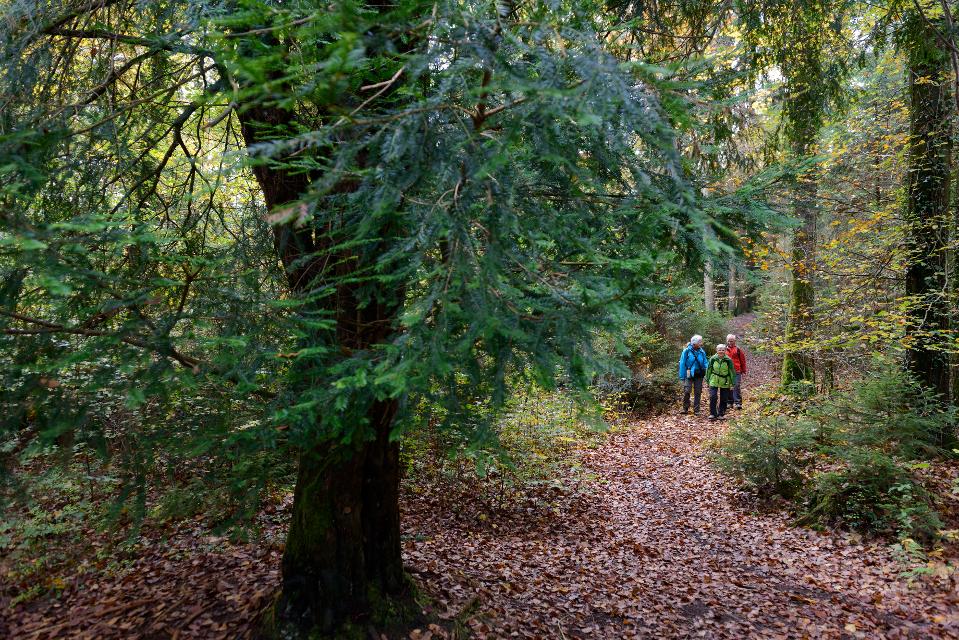
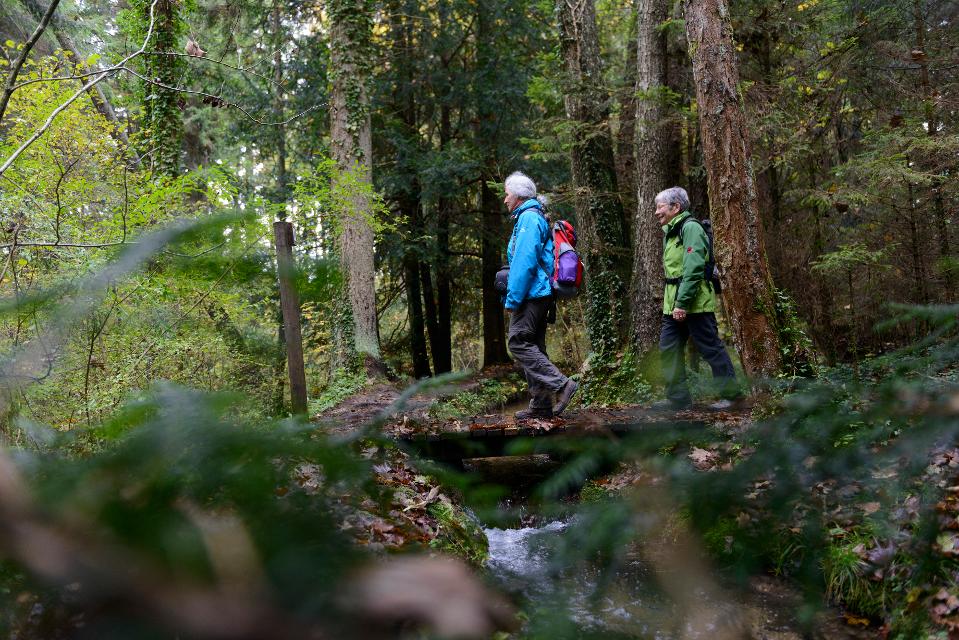
The marked route continues on the road towards Zellsee-Wessobrunn to the official parking lot, which invites you to visit the Paterzell yew trail. Here you should leave your bike, pick up a leaflet available there, and walk the approximately 1 km long educational trail. At 10 stations, there is very illustrative information about the yew or this “fairy tale forest.”

The yew forest near Paterzell was first protected in 1939 and designated as a nature reserve in 1984. Here you find Germany‘s largest occurrence of yews, about 800 trees are over 200 years old, which corresponds to almost 50% of the population. The oldest reach over 700 years. However, it is not a pure stand but a near-natural mixed forest with spruces, firs, beeches, and other tree species. These grow on several meters thick tuff. The latter forms when very calcium-rich groundwater emerges and deposits lime in solid form. The tuff itself was quarried in the yew forest for many centuries and used for numerous buildings in the Pfaffenwinkel region. Since today, due to water withdrawal, the slope is no longer widely sprinkled with lime-rich water, tuff formation can currently only be observed in a few places.

The yew is the oldest native tree species, existing for about 150 million years. Except for the red fruit, it is poisonous, which is a reason for the rare occurrence of this conifer species. The trees were removed in the past because their branches posed a deadly danger to horses, which are sensitive to the toxin taxine. Furthermore, yew wood was prized for bows and crossbows. The Wessobrunn monastery used it for window frames of buildings and made wreaths from the branches. Current dangers for the Paterzell yew forest are storms, bark beetle infestation, and browsing by wildlife. Young yew shoots are often nibbled by deer, without the latter being harmed, as they only eat as much as they can tolerate.

The yew also poses no danger to humans; rather, components of it are used today in cancer treatment. If the yew forest seems messy and untidy to you, there is a good reason for this: in this nature reserve, fallen dead trees are left lying because they provide habitat for thousands of organisms such as beetles and fungi and are thus very important for species conservation.

From the parking lot, the route continues on the road to the hamlet Zellsee. It has been owned by the Wessobrunn monastery since 1419 and was purchased by the municipality of Wessobrunn after secularization. After crossing the state road (underpass), keep right to the next junction, which leads left up into Lichtenau.

Opposite the junction is the hamlet Weghaus. Here, since about 1460, road makers lived, who were responsible for maintaining the road between Weilheim and Wessobrunn and collected tolls at the Rott bridge.

The Wessobrunn monastery had, besides its own pastures, also the cattle driving rights in Lichtenau. In this context, there were years of disputes with the people of Weilheim before the borders were newly fixed in a settlement in 1711. The scattered settlement in Lichtenau is relatively young. Only in the 1930s was a large settlement project designed, in which fifty farmsteads were to be created for new settlers, mainly Germans from South Tyrol. The first groundbreaking was in 1939. Due to the Second World War, only a few areas were drained until its end in 1945, only a small part of the planned roads were built, and only three farms were erected. However, after the war, the project was resumed to accommodate numerous displaced persons and refugees. Thus, properties for newcomers as well as locals emerged in Lichtenau. Today, pasture and grassland use dominates here, as everywhere in the Alpine foothills, which is suitable due to soil conditions and relatively high precipitation.

After the level area (Würm ground moraine) of Lichtenau, the route goes downhill through the forest into the former Ammersee basin. This step in the terrain also originated during the glacier‘s melting.

On the paved Madenbergweg, the route continues through the Weilheimer Moos. The once extensive marshland, part of the moors in the area of the former Ammersee, presents itself today as a colorful mosaic. However, intensive agricultural use predominates. Only fragmented remnants of hay meadows, birch moor forests, and willow bushes remain. Additionally, peat extraction and water areas are interspersed. This mosaic of habitats is very important as breeding, resting, and feeding area especially for birds.

Notable are water birds, meadow breeders, and birds of prey, special treasures are stonechats, reed warblers, gray buntings, and reed buntings. According to the maintenance and development plan set up in 1999 for the Schwattachfilz, a part of the Weilheimer Moos, the northern area may continue to be used intensively for agriculture, while the southern part is designated for nature conservation.

On a paved path, one reaches the Ammer at the renatured Unterhausen weir. From there, the route goes upstream back to the starting point. Those who want to linger a bit longer on the route can rest on one of the benches.


  • Aufstieg: 134 hm

  • Abstieg: 134 hm

  • Länge der Tour: 24,0 km

  • Höchster Punkt: 664 m

  • Differenz: 115 hm

  • Niedrigster Punkt: 549 m

Difficulty

moderate

Stamina

moderate

Panoramic view

high

Saisonale Eignung

geeignet witterungsbedingt nicht geeignet unbekannt
  • JAN

  • FEB

  • MRZ

  • APR

  • MAI

  • JUN

  • JUL

  • AUG

  • SEP

  • OKT

  • NOV

  • DEZ

Features trail

Many views

Geological highlights

Circular route

Rest point

Botanical highlights

Parking lot at the Hochlandhalle in Weilheim

Mit öffentlichen Verkehrsmitteln: By train to the station in Weilheim, from there it is only a few minutes to the starting point of the route.

Startpunkt: Ammer Bridge on the state road towards Wessobrunn

Ziel: Ammer Bridge on the state road towards Wessobrunn

Navigieren zu

Höhenprofil SVG
Höhenprofil SVG
GPX Track
GPX Track
Karte als PDF
Karte als PDF

diese Seite teilen

Essen in der Nähe

"Essen in der Nähe" überspringen

ca. 0,5 km entfernt

Café VerWeilheim

Herzog-Christoph-Straße 1, 82362 Weilheim

Vielfältig - sozial - engagiert In unserem Café sind alle willkommen und sollen sich wohlfühlen: Kinder und Erwachsene, Menschen mit Behinderung, Menschen mit und ohne Arbeit oder im Ruhestand.

ca. 0,5 km entfernt

Cafe Central

Marienplatz 21, 82362 Weilheim

ca. 0,5 km entfernt

Gasthof Allgäuer Hof

Marienplatz 17, 82362 Weilheim

Der Allgäuer Hof ist eine traditionelle bayrische Gaststätte im Zentrum Weilheims (in Oberbayern).

ca. 0,6 km entfernt

Coconut-Milk-Bar

Ledererstr. 11, 82362 Weilheim

ca. 0,7 km entfernt

Cafe-Bistro Hänsel´s

Herrnfeldstr. 30, 82362 Weilheim

ca. 0,7 km entfernt

Hotel Restaurant Pöltner Hof Weilheim

Pollinger Str. 4 & 6, 82362 Weilheim in Oberbayern

Die zentrale Lage im Zentrum von Weilheim und die schmackhafte Küche lockt Gäste von Nah und Fern in unser Restaurant. Reservieren Sie Ihren Tisch online.

ca. 1,5 km entfernt

Restaurant Landhaus

Holzhofstr. 25, 82362 Weilheim

ca. 2,0 km entfernt

Krug’s Restaurant

Narbonner Ring 11, 82362 Weilheim

Krug’s Restaurant ist ein Novum in Weilheim und der gesamten Umgebung. Selbst verwöhnte Feinschmecker und hungrige Wanderer zieht es ins Krug’s Restaurant, denn die abwechslungsreiche Speisekarte, welche sich Saisonal ändert, findet großen Anklang.

ca. 3,3 km entfernt

Gasthof Goldener Stern

Marnbacherstr. 2, 82362 Weilheim

ca. 3,6 km entfernt

Alte Klosterwirtschaft

Weilheimer Str. 12, 82398 Polling

Die Alte Klosterwirtschaft ist ein ideales Ausflugs­ziel im ober­bayerischen Pfaffen­winkel.

"Essen in der Nähe" zurückspringen

Unterkünfte in der Nähe

"Unterkünfte in der Nähe" überspringen

ca. 0,3 km entfernt

Ferienwohnung Blinzler

Färbergasse 6, 82362 Weilheim i. OB

ca. 0,5 km entfernt

Hotel Vollmann

Eisenkramergasse 4, 82362 Weilheim

țțț

ca. 0,6 km entfernt

Altstadthotel Bachbräu

Pöltnerstraße 4, 82362 Weilheim

ca. 0,7 km entfernt

Hotel Pöltner Hof

Pollinger Straße 4+6, 82362 Weilheim in Oberbayern

ca. 0,8 km entfernt

Gästehaus Olbrich

In der Au 22, 82362 Weilheim i. OB

ca. 1,4 km entfernt

Ferienwohnung Elisabeth

Wettersteinstraße 8, 82362 Weilheim i. OB

ca. 3,3 km entfernt

Ferienwohnung Spiegl

Dorfstraße 19, 82398 Polling

ca. 4,5 km entfernt

Gästehaus Bartl

Hardtstraße 4, 82362 Weilheim-Marnbach

ca. 5,8 km entfernt

Bauernhof Berghof Heger

Berghof 1, 82380 Peißenberg

2x FȚȚȚȚȚ|3x FȚȚȚȚ

ca. 6,1 km entfernt

Ferienwohnung Resch

Stammerstraße 7, 82380 Peißenberg

ca. 6,2 km entfernt

Gasthof zur Post

Ludwigstraße 1, 82380 Peißenberg

ca. 6,4 km entfernt

Landgasthof Zum Eibenwald

Peißenberger Str. 11, 82405 Wessobrunn-Paterzell

ca. 6,5 km entfernt

Ferienwohnung Schmidt

Frankenstraße 14, 82380 Peißenberg

FȚȚȚ

ca. 6,9 km entfernt

Haus Fischer

Hauptstraße 85, 82380 Peißenberg

ca. 6,9 km entfernt

Haus Schnitzer

Hauptstraße 82, 82380 Peißenberg

ca. 7,1 km entfernt

Gasthaus Sonne

Hauptstraße 92, 82380 Peißenberg

ca. 7,4 km entfernt

Ferienwohnungen Bauer

Schweiber 2, 82380 Peißenberg

ca. 7,7 km entfernt

Ferienwohnung Ammertal

Ganghoferstr. 14, 82380 Peißenberg

FȚȚȚ

"Unterkünfte in der Nähe" zurückspringen

Weitere Tipps in der Nähe

"Weitere Tipps in der Nähe" überspringen

ca. 0,3 km entfernt

Parkplatz an der Stadthalle

Wessobrunner Straße 8, 82362 Weilheim in Oberbayern

ca. 0,4 km entfernt

BMX-Bahn Weilheim

Badweg, 82362 Weilheim

ca. 0,5 km entfernt

Spielplatz

Ammerstraße, 82362 Weilheim

ca. 0,5 km entfernt

Spielplatz / Bolzplatz

Kanalstraße, 82362 Weilheim

ca. 0,6 km entfernt

Spielplatz / Bolzplatz

Paradeisstraße, 82362 Weilheim

ca. 0,6 km entfernt

Stadtmuseum Weilheim

Marienplatz 1, 82362 Weilheim

ca. 0,6 km entfernt

Stadtpfarrkirche Mariae Himmelfahrt Weilheim

Admiral-Hipper-Str., 82362 Weilheim

Zu "Weitere Tipps in der Nähe" zurückspringen

Das könnte Dir auch gefallen

"Das könnte Dir auch gefallen" überspringen
Zu "Das könnte Dir auch gefallen" zurückspringen